
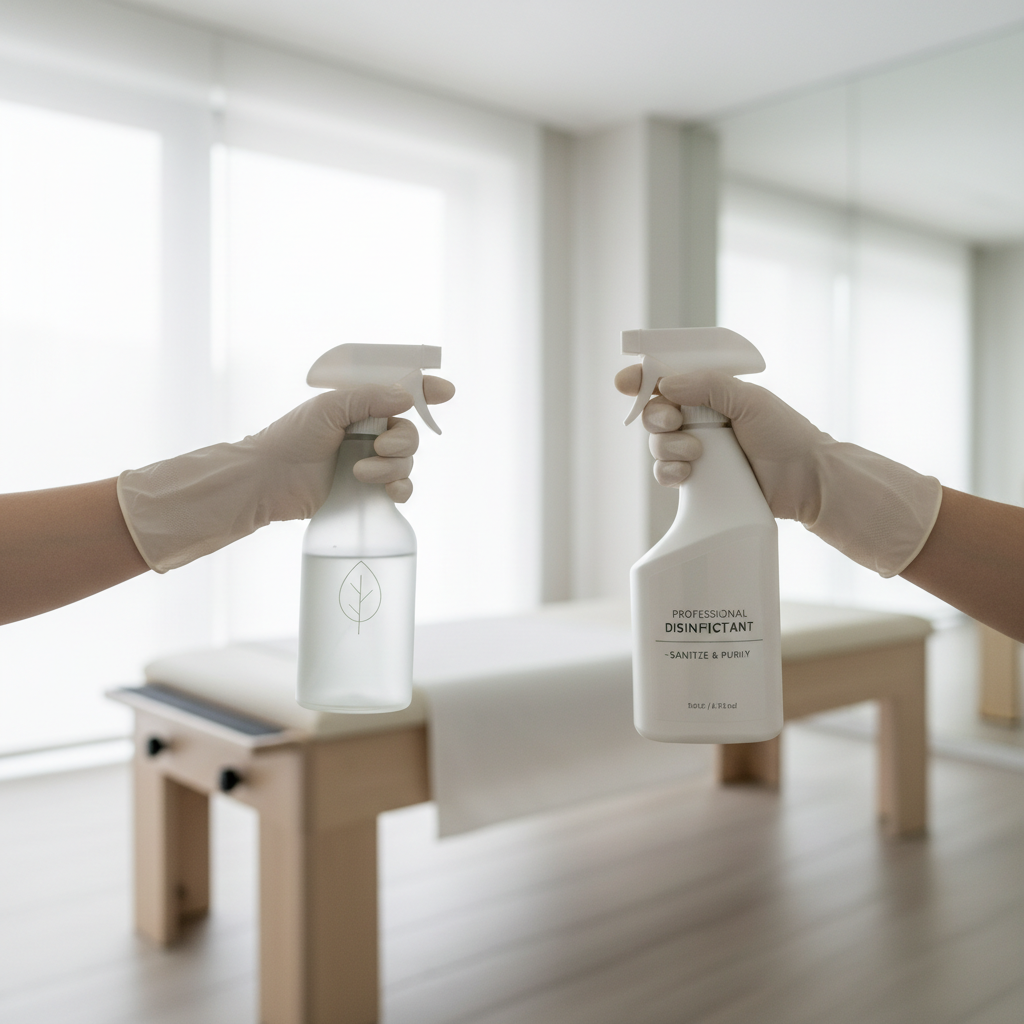
In the wellness world, “green” is gold. Your clients choose your boutique studio or spa not just for the service, but for the ethos. They expect a clean, safe, and healthy environment, and the allure of “all-natural” and “eco-friendly” cleaning products seems to fit that promise perfectly. But in high-traffic, high-touch wellness spaces across Brooklyn, Manhattan, and Queens, a critical question arises. Are gentle, green products enough to ensure genuine safety? The answer requires a professional understanding of what these products can (and cannot) do.
The truth is, while eco-friendly cleaners have an important role, they are not a complete solution for a commercial wellness environment. Protecting your clients and your business requires a nuanced, risk-based approach. It demands knowing the difference between cleaning for appearance and disinfecting for health. This guide provides the clarity you need to build a cleaning protocol that is both responsible and effective.
Defining Our Terms: Cleaning, Sanitizing, and Disinfecting
To make informed decisions, you must first understand the language of professional cleaning. These terms are not interchangeable. Each represents a different process with a very different outcome.
- Cleaning is the physical removal of dirt, dust, and grime from a surface. This is what most people do at home. A simple spray and wipe action, which often uses soap or detergent, lifts away soil. Most green and eco-friendly products are excellent cleaners. They are great for making things look and smell fresh.
- Sanitizing is the process of lowering the number of germs on a surface to a safe level, as defined by public health standards. This is a step up from cleaning. It reduces, but does not necessarily eliminate, all microorganisms.
- Disinfecting is a chemical process that kills or inactivates virtually all pathogenic microorganisms (like bacteria, viruses, and fungi) on a surface. This process is highly regulated and requires the use of an EPA-registered disinfectant. This is the only way to neutralize serious threats like influenza, staph, or other contagions common in close-contact environments.
For a med spa, pilates studio, or busy fitness center, simply “cleaning” is not enough for any surface that comes into contact with human skin.
The Right Place for Green Cleaning in Your Wellness Space
Let’s be clear, we believe in the value of green cleaning products. They are an essential part of a modern, responsible cleaning program. Using products with low volatile organic compounds (low VOCs) contributes to better indoor air quality, which is a major plus for both your staff and clients. They also reinforce your brand’s commitment to sustainability.
The key is using them in the right places. Think of these as your “low-risk” zones and tasks, where the primary goal is appearance and basic hygiene, not pathogen control.
Ideal Applications for Eco-Friendly Cleaners
Green products are perfectly suited for a variety of tasks where the risk of pathogen transmission is minimal.
- Dusting furniture and decor
- Cleaning windows, mirrors, and other glass surfaces
- Wiping down walls and baseboards
- Mopping floors in low-traffic areas like reception or hallways
- Light cleaning of staff-only spaces like a breakroom kitchenette
Using green cleaners for these jobs is smart. It keeps your space looking sharp and maintains great air quality without introducing harsh chemicals where they are not needed.
When Disinfection is Non-Negotiable: Protecting Clients and Your Business
Now we move to the high-stakes areas of your business. These are the zones where clients are sweating, touching surfaces with bare skin, and expecting the highest possible standard of hygiene. In these areas, relying on a simple eco-cleaner is a serious operational liability. Health and safety protocols demand the proven efficacy of an EPA-registered disinfectant.
An EPA registration number on a product label is a legal confirmation. It means the product has undergone rigorous testing to prove it can kill the specific viruses and bacteria it claims to. For a wellness business in a competitive market like New York City, demonstrating this level of care is not optional, it is fundamental.
High-Risk Points Requiring EPA-Registered Disinfection
- Fitness and Pilates Studios: Every part of a yoga mat, the carriage and straps of a pilates reformer, all dumbbells and kettlebells, benches, and especially the surfaces in your locker rooms and showers.
- Med Spas and Day Spas: Treatment tables and headrests, aesthetician tools (which require sterilization), equipment control panels, magnifying lamps, and any surface a client’s skin touches.
- All Wellness Businesses: Door handles, light switches, reception desks, payment terminals, water cooler buttons, and all bathroom fixtures (sinks, toilets, faucets). These high-touch points are primary vectors for germ transmission.
A critical component of disinfection is dwell time. This is the amount of time a disinfectant must remain visibly wet on a surface to effectively kill pathogens. Wiping a disinfectant on and then immediately wiping it off does nothing. A professional cleaning team understands that each product has a specific, required dwell time, often ranging from 30 seconds to 10 minutes.
The TidyMole Framework: Clean First, Then Disinfect
So how do you balance your eco-conscious values with the need for clinical-level hygiene? You stop thinking of it as an “either, or” choice. The professional standard, and the protocol we use for all our clients from Long Island to Manhattan, is a two-step process.
Step 1: Clean the Surface. You cannot disinfect a dirty surface. Dirt, sweat, and oils create a biofilm that shields germs, making disinfectants ineffective. The first step for any high-touch surface is to thoroughly clean it to remove all physical grime. This is a perfect job for a high-quality, eco-friendly cleaner.
Step 2: Apply an EPA-Registered Disinfectant. Once the surface is physically clean, it is time to disinfect. A trained technician will apply the appropriate disinfectant, ensuring complete coverage and respecting the mandatory dwell time before wiping or letting it air dry. This step takes a surface from looking clean to being verifiably hygienic.
This “clean then disinfect” method is the only way to achieve true safety. It delivers the best of both worlds, using gentle products where possible and powerful disinfectants where necessary.
Navigating Client Perceptions in the NYC Wellness Market
In a city that sets global trends, your clients are exceptionally discerning. They notice the details. Presenting a brand that is all about natural wellness while failing to properly disinfect your high-touch equipment is a contradiction that can damage your reputation. True professionalism lies in showing you understand the nuance. It means educating your staff and being transparent about your commitment to safety. A smart cleaning protocol is not just an operational task, it is a powerful form of marketing that builds trust and client loyalty. Ultimately, a balanced approach is not a compromise. It is the most intelligent and responsible way to operate a wellness business today.
Ready for a spotless space?
TidyMole keeps med spas, fitness studios, pilates studios, and day spas across Brooklyn, Manhattan, Queens, and Long Island client-ready every single day. Call or Text Us Today for a fast, no-obligation walkthrough, or request your Free Quote in under a minute.