
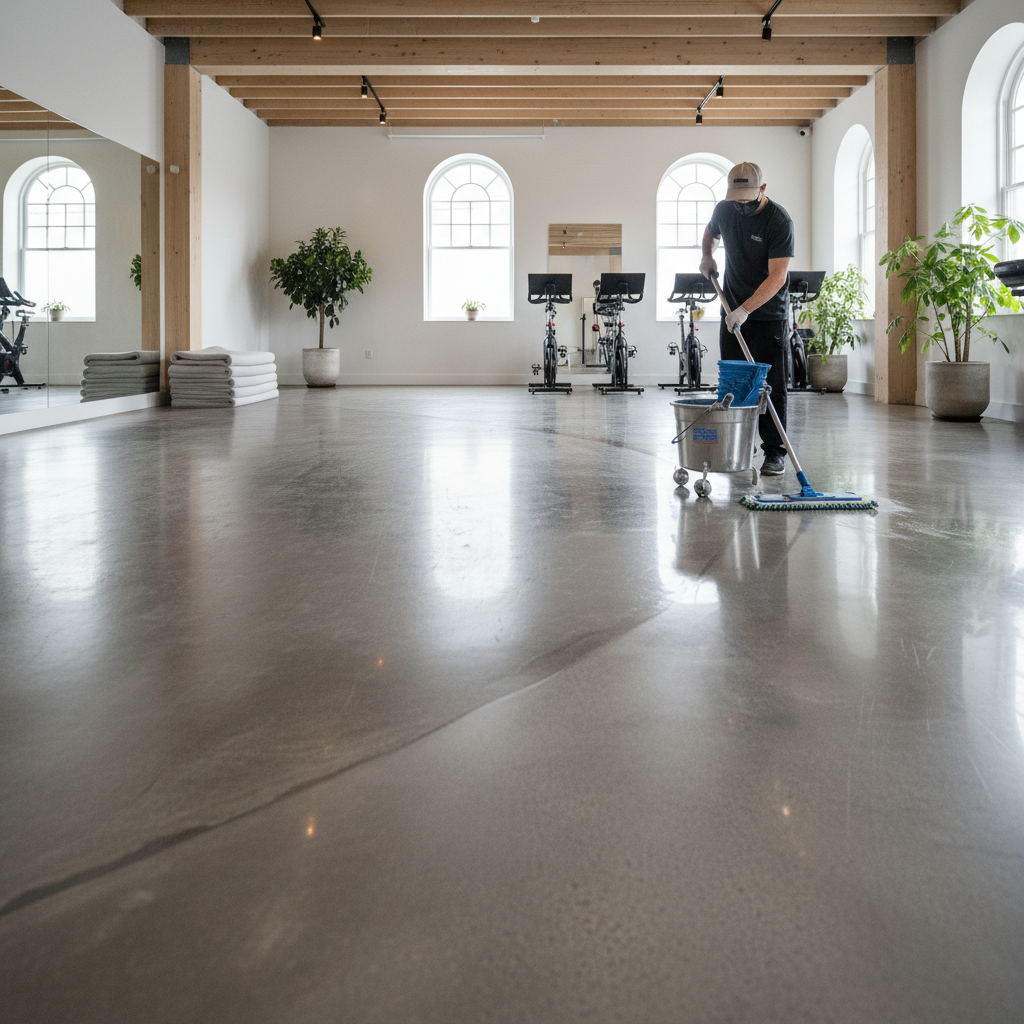
Your boutique fitness studio is a sanctuary for your clients. Every detail, from the lighting to the equipment, is curated to create a premium experience. But when clients look down, what do they see? Dull, streaky, or grimy floors can undermine that carefully crafted atmosphere, suggesting a lack of cleanliness even when your team is cleaning constantly. The frustrating truth for many studio owners across NYC is that the problem is not a lack of effort. The problem is using the wrong method for the material. A floor that looks perpetually dull is almost always the result of residue buildup, a problem that more cleaning, done incorrectly, will only make worse.
The Real Reason Your Studio Floors Are Losing Their Shine
In a high traffic environment like a Manhattan pilates studio or a busy Brooklyn yoga space, floors take a serious beating. Sweat, body oils, and street grime are daily challenges. However, the hazy film or sticky residue you see is often caused by the cleaning process itself. Here are the most common culprits:
- Using the wrong cleaning solution. A cleaner that is too alkaline or too acidic can damage the floor’s finish or leave a film. All purpose cleaners are rarely the right choice.
- Using too much product. More is not better. Excess cleaning concentrate doesn't get picked up or rinsed away, leaving a sticky layer that actually attracts more dirt.
- Dirty water and mops. A single bucket mop system essentially means you are pushing dirty water around your studio after the first few passes. This spreads a thin layer of grime across the entire floor.
- Skipping the rinse step. For deeper cleaning, removing the detergent residue with a clean water rinse is a non negotiable step for achieving a truly clean, clear finish.
The Right Way to Clean: A Material by Material Guide
To get the shine back, you must clean for the specific floor you have. Here’s a breakdown of common flooring materials found in wellness studios and how to properly maintain them.
Luxury Vinyl (LVT) and Vinyl Composite (VCT)
The Challenge: Extremely durable and popular, vinyl floors are susceptible to a hazy film from improper cleaners and old, built up floor finish.
The Professional Method:
- Daily Care: Start with a microfiber dust mop to collect dust and grit. This is the most important step. Sweeping with a low quality broom just pushes small particles around.
- Regular Cleaning: Damp mop using a pH-neutral commercial floor cleaner. This is critical. A neutral pH (around 7.0) cleans effectively without leaving a residue or damaging the floor’s protective wear layer. Use a two bucket system to ensure you are always using a clean solution.
- Deep Cleaning: Periodically, LVT and VCT require a professional strip and wax (for VCT) or a deep machine scrub (for LVT) to remove embedded soils and accumulated layers of old finish. This process restores the floor to a like new condition and is essential for long term appearance and hygiene.
Hardwood and Engineered Wood
The Challenge: Wood floors add warmth and a high end feel, but they are highly sensitive to water and harsh chemicals. Using the wrong product can strip the polyurethane finish, leading to dullness and irreversible damage.
The Professional Method:
- Daily Care: Again, microfiber dust mopping is essential. Grit and dirt act like sandpaper under the feet of your clients, scratching the finish and creating a dull appearance.
- Regular Cleaning: Use a professional grade hardwood floor cleaner sprayed in a very fine mist directly onto a microfiber mop pad, not the floor. The mop pad should be barely damp. Never, ever wet mop or use a steam cleaner on a wood floor. Avoid common DIY solutions like vinegar and water, as the acid can eat away at the finish over time.
- Long Term Maintenance: When the finish begins to show wear, a professional screen and recoat is the solution. This process involves lightly abrading (screening) the top layer of finish and applying a new coat, restoring the protective layer and shine without the cost and downtime of a full sand and refinish.
Cork
The Challenge: Popular in pilates and yoga studios for its softness and sustainability, cork is highly porous. Excessive water can cause it to swell and warp, and harsh chemicals can damage its delicate structure.
The Professional Method:
- Daily Care: Treat it like hardwood. Sweep with a soft brush or vacuum using a soft brush attachment.
- Regular Cleaning: Cork must be cleaned with an almost dry mop. Use a pH-neutral cleaner, heavily diluted, and a mop that has been thoroughly wrung out. You are cleaning the protective sealant on the cork, not the cork itself. Ensuring a quality sealant is intact is key to its longevity.
Marmoleum and Linoleum
The Challenge: These eco friendly materials are known for their durability and color, but their natural composition makes them sensitive to high pH cleaners. Alkaline cleaning agents can cause the linseed oil to oxidize, leading to yellowing and stripping the factory finish.
The Professional Method:
- Daily Care: Dust mop to remove abrasive debris.
- Regular Cleaning: Just like with vinyl and cork, a pH-neutral cleaner is your only choice. Using anything else is a recipe for dull, discolored floors. Apply with a damp mop as part of a two bucket system.
- Restoration: Professional floor machines with specific pads can be used to buff Marmoleum, which helps harden the surface and restore its natural sheen without adding any chemicals.
Beyond the Mop: Best Practices for Proactive Floor Care
Invest in High Quality Matting: Your first line of defense is at the front door. Especially in boroughs like Queens and Brooklyn where foot traffic brings in a mix of city grime and weather related debris, robust entrance matting is not optional. It should be large enough for several footsteps to remove dirt and moisture before a client ever reaches your studio floor.
Embrace the Two Bucket System: Get one bucket for your clean water and solution, and a second bucket with a wringer for the dirty water. This simple change is a hallmark of professional cleaning, ensuring you are removing dirt, not just moving it around.
Use Microfiber: Ditch the classic cotton string mop. Microfiber mop heads are made of fibers that are split to create a static charge, attracting and holding onto dust and dirt particles far more effectively. They also require less water and cleaning solution.
Achieving and maintaining a pristine floor is about precision and proper technique, not just effort. By matching your cleaning protocol to your floor’s material, you protect your investment, enhance your studio's aesthetic, and provide the clean, safe, and luxurious environment your clients pay for. It sends a clear message that your studio’s commitment to wellness starts from the ground up.
Ready for a spotless space?
TidyMole keeps med spas, fitness studios, pilates studios, and day spas across Brooklyn, Manhattan, Queens, and Long Island client-ready every single day. Call or Text Us Today for a fast, no-obligation walkthrough, or request your Free Quote in under a minute.